
The manufacturing world is changing faster than most people realize. While headlines throw around big numbers about software-defined factories, here's what's actually happening: by 2029, 30% of factories will configure and manage control systems centrally using software-defined automation platforms. Meanwhile, over 40% of manufacturers with production scheduling systems will upgrade them with AI-driven capabilities by 2026.
The numbers might be slightly different than the buzzwords suggest, but the trend is crystal clear. Your factory floor is becoming a software platform, whether you're ready or not.
What Does "Software-Defined" Actually Mean?
Software-defined manufacturing means your factory's physical operations are controlled, monitored, and optimized through software rather than hardwired systems. Instead of having dozens of separate machines with their own controls, you get a unified platform that manages everything from inventory to quality control.
Think of it like upgrading from individual TV remote controls to a single smart home app that controls your lights, temperature, security, and entertainment system. Everything connects, everything talks to each other, and you can manage it all from one place.
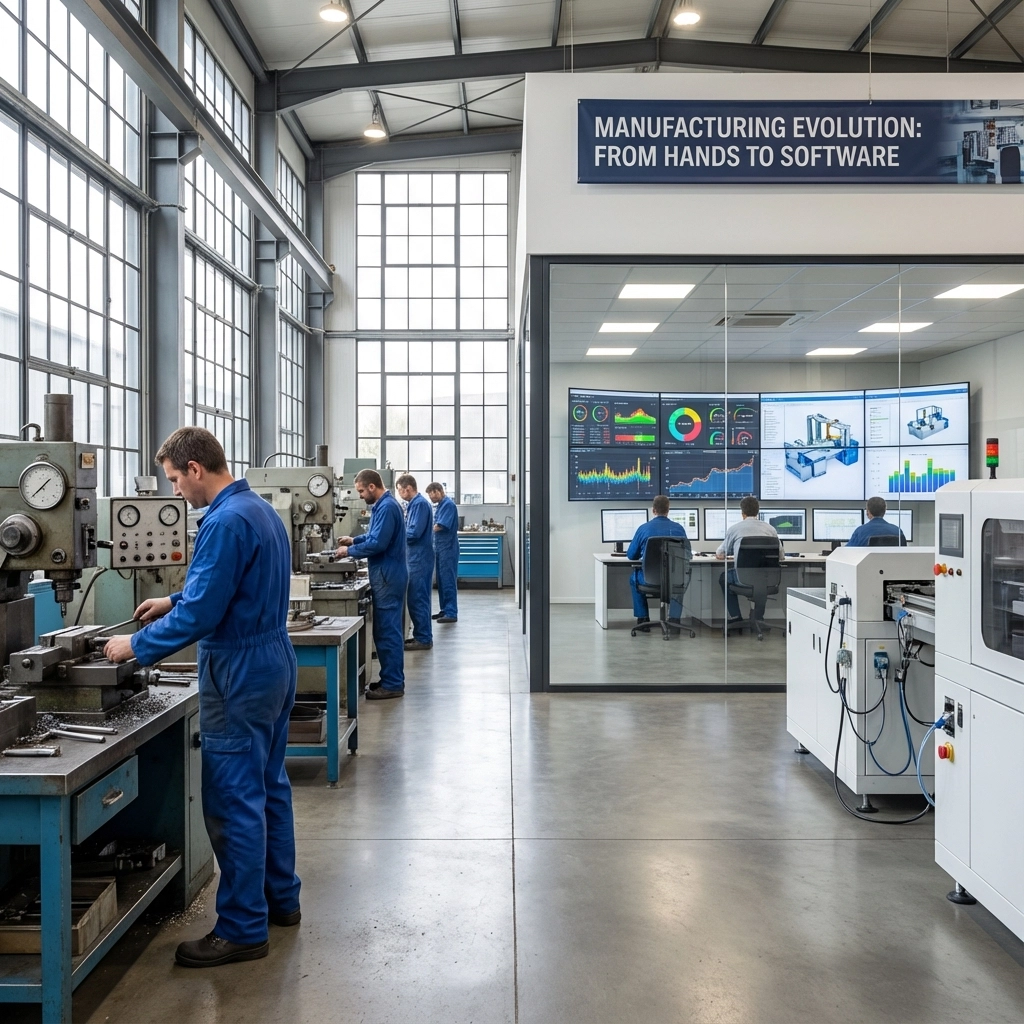
The Numbers Behind the Shift
The industrial opportunity is massive. There are 14.5 million industrial establishments worldwide, representing a $4.5 trillion optimization opportunity. The global industrial software market is expanding rapidly, growing from $21.5 billion in 2024 to an estimated $46.6 billion by 2029. That's a 16.7% annual growth rate.
Companies aren't investing this heavily in software-defined systems for fun. They're doing it because the ROI is real. Software-defined technologies reduce capital and operating costs through more efficient resource use and automation.
Why This Is Happening Now
The Data Explosion
Manufacturing generates an incredible amount of data. By 2030, all manufacturing industries will accumulate 92 exabytes of data from internal and external sources. That's roughly equivalent to 92 billion gigabytes.
Traditional factory systems can't handle this volume. Software-defined automation enables organizations to process this data through unified platforms, driving process optimization and analytics capabilities that were impossible before.
Cost Pressures Are Real
Every manufacturer faces the same challenge: do more with less. Software-defined approaches deliver efficiency gains that directly impact your bottom line. When you can centrally manage control systems, you reduce maintenance costs, minimize downtime, and optimize resource allocation automatically.
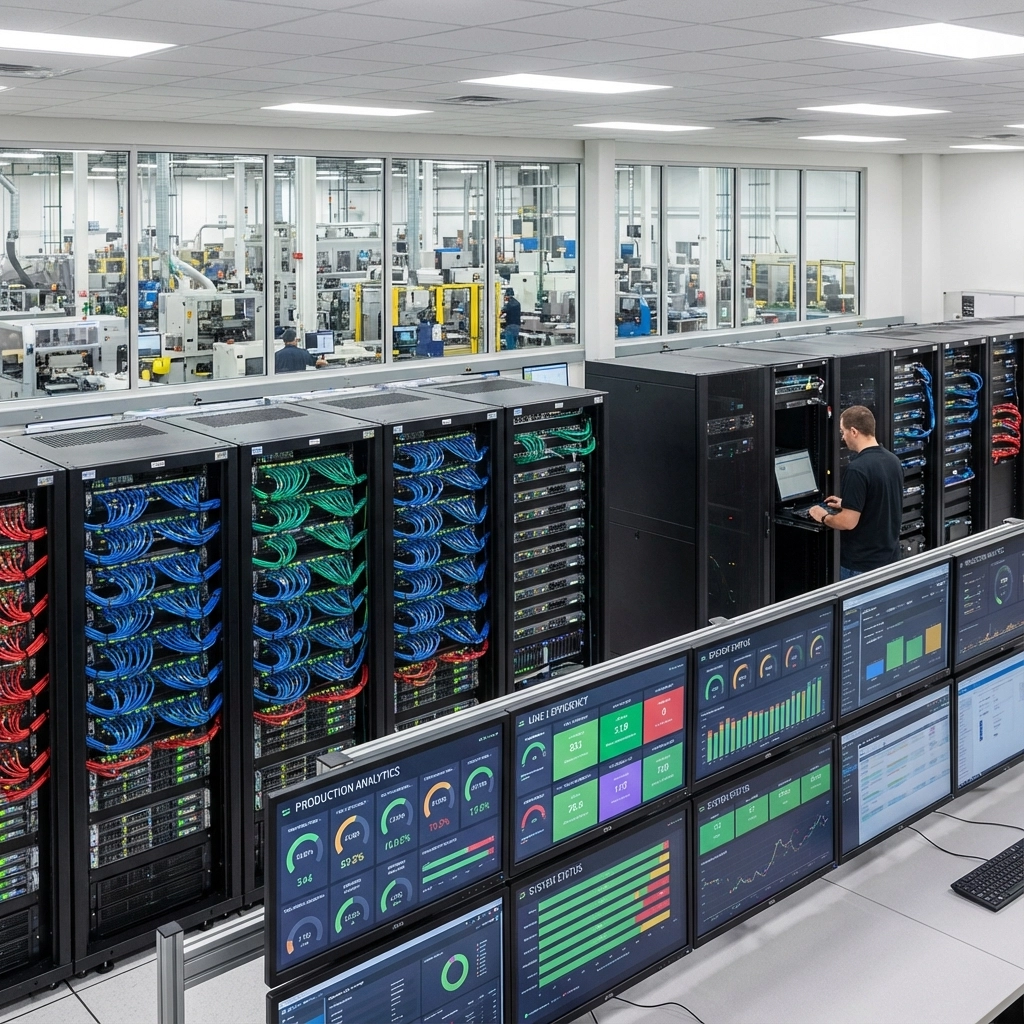
Workforce Evolution
Here's something most people get wrong about factory automation: it's not eliminating jobs. It's shifting the industrial workforce toward higher-skilled roles. Today, approximately 30% of the industrial workforce works on robotics, automation, and plant software. This percentage is growing, not shrinking.
By 2027, over 50% of manufacturers will use AI-enabled knowledge management tools to reskill their workforce. The jobs aren't disappearing: they're changing.
What This Means for Your Operations Team
Your operations team will need to adapt to new realities. Software-defined factories require different skills than traditional manufacturing environments.
New Skill Requirements
Your team will need capabilities in cloud-native operations, AI-driven control systems, and hybrid-cloud workload management. These aren't optional nice-to-haves anymore. They're core competencies for modern manufacturing.
The good news? Most of these skills build on existing knowledge. If your team understands process control, they can learn software-defined process control. If they know quality management, they can master AI-driven quality systems.
Training and Development Priorities
Organizations should prioritize workforce reskilling programs now, not later. Design closed human-robot training loops to avoid higher downtime and retraining costs. When your team knows how to work with automated systems, productivity goes up and errors go down.
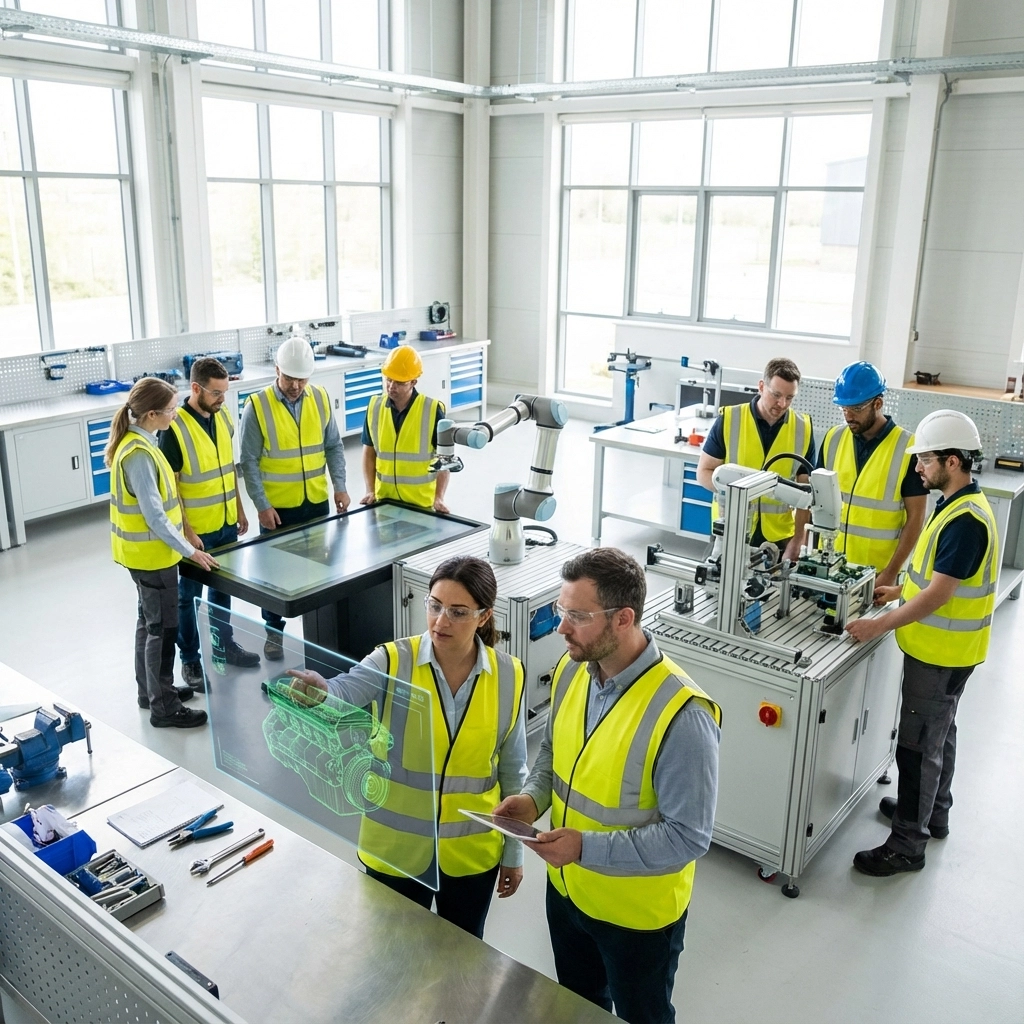
What This Means for Your IT Team
Your IT team faces a completely different set of challenges. They're no longer just supporting office computers and email systems. They're becoming the backbone of your entire manufacturing operation.
Infrastructure Requirements
Software-defined manufacturing requires robust, reliable IT infrastructure. Your network needs to handle real-time data from dozens or hundreds of connected devices. Downtime isn't just inconvenient: it stops production entirely.
Cloud integration becomes critical. Your systems need to process data locally for immediate responses while sending information to cloud platforms for analysis and optimization.
Security Considerations
When your factory floor connects to software systems, cybersecurity becomes a production issue. A security breach doesn't just compromise data: it can shut down manufacturing lines.
Your IT team needs to understand operational technology (OT) security, not just information technology (IT) security. These are different worlds with different requirements.
Preparing Your Team for the Transition
The shift to software-defined manufacturing isn't happening overnight, but it's happening faster than most companies are preparing for it.
Start with Knowledge Management
Before you can automate processes, you need to document them. Many manufacturers discover they don't actually know how their own processes work when they try to digitize them.
Dellini AI specializes in helping manufacturers capture and digitize their tribal knowledge before key employees retire or leave. This foundation work is essential for successful software-defined implementation.
Focus on Cross-Training
Software-defined systems break down traditional silos between departments. Your maintenance team needs to understand software issues. Your IT team needs to understand manufacturing processes. Your operations team needs to work with data analysts.
Start cross-training now, even if your systems aren't fully software-defined yet. The knowledge transfer takes time, and you want your team ready before you need them to be.
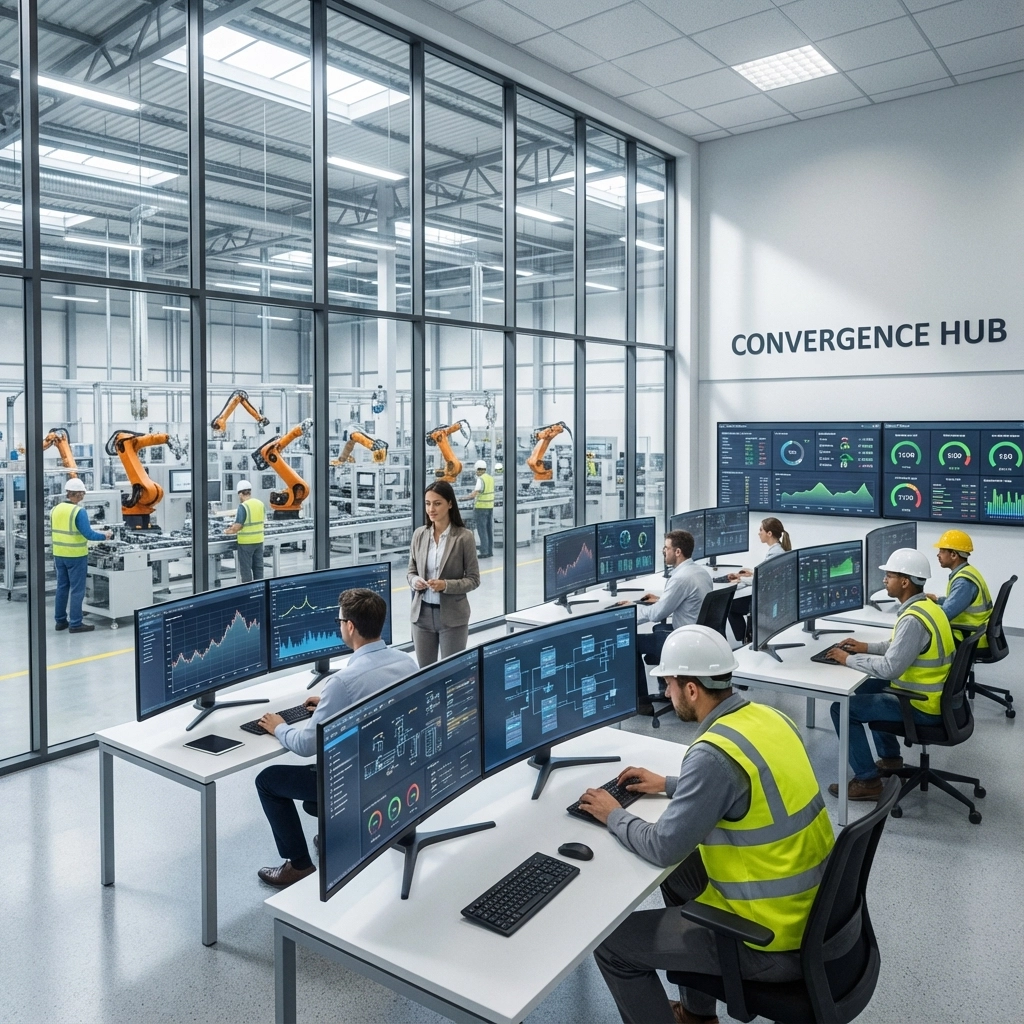
Invest in Change Management
Technical implementation is only half the battle. The bigger challenge is helping people adapt to new ways of working. Software-defined systems change job responsibilities, workflow patterns, and decision-making processes.
Plan for this change. Communicate early and often about what's coming and how it affects each team member's role.
The Competitive Reality
Here's the bottom line: this isn't optional anymore. Your competitors are already implementing software-defined systems. The companies that adapt quickly will gain significant advantages in efficiency, quality, and cost management.
The companies that wait will find themselves at an increasing disadvantage. Software-defined manufacturing isn't a future trend: it's happening right now.
Getting Started
You don't need to transform your entire factory overnight. Start with pilot projects in specific areas. Choose processes that are well-documented, have clear success metrics, and won't disrupt critical operations if something goes wrong.
Learn from these pilots. Understand what works, what doesn't, and what your team needs to succeed. Then scale gradually based on proven results.
The shift to software-defined manufacturing is inevitable. The question isn't whether it will affect your factory: it's whether you'll be ready when it does.
Your team's success depends on starting preparation now, not waiting until the technology forces change upon you. The manufacturers who get ahead of this trend will be the ones who thrive in the software-defined future.