
Your newest hire just finished their sixth month, and they're finally operating at full capacity. Congratulations: you've just spent $24,000 more than you needed to.
That's the hidden cost of manufacturing's traditional training approach, where new employees take anywhere from four to six months to reach full productivity. While your competitors are cutting ramp times to weeks, your extended training periods are bleeding money, frustrating new hires, and creating dangerous knowledge gaps on your factory floor.
The True Cost of Six-Month Ramp Times
Most manufacturing leaders underestimate the financial impact of lengthy training periods. For a new employee earning $60,000 annually, the total cost of a six-month ramp-up period reaches approximately $24,000: that's 40% of their annual salary.
Here's how that breaks down:
Lost Productivity: $12,000
During those six months, your new hire operates at 50-70% efficiency. You're paying full wages for partial output, creating a productivity gap that costs roughly $2,000 per month.
Support Time: $6,000
Your experienced workers spend countless hours answering questions, reviewing work, and correcting mistakes. When five skilled operators each spend 20 hours monthly supporting the new hire at $50 per hour fully loaded cost, that's $5,000 over five months.
Supervisor Overhead: $4,000
Your floor supervisors dedicate 10-15 hours weekly to training oversight, costing approximately $800 per month in direct supervision time.
Equipment and Setup: $2,000
Tools, safety equipment, software access, and specialized materials add up quickly in manufacturing environments.
Why Manufacturing Gets Hit Harder
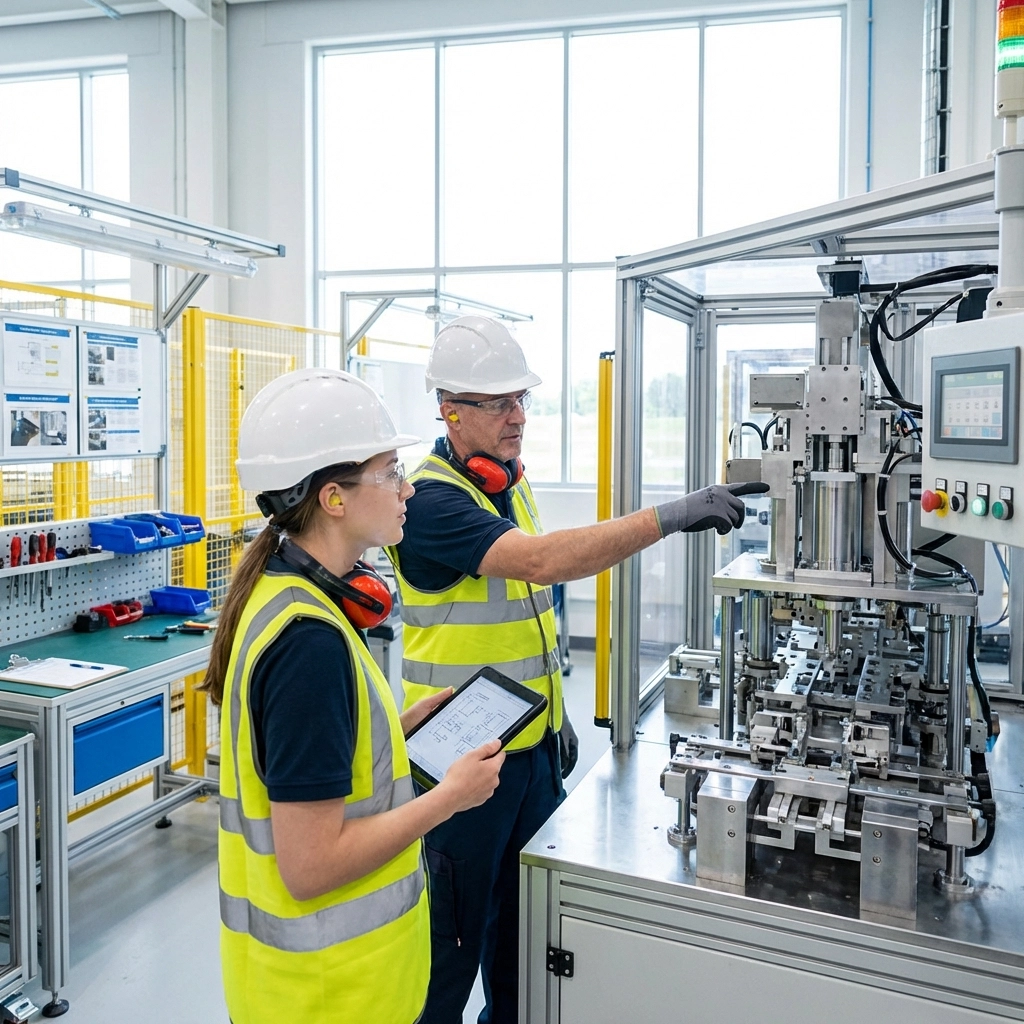
Manufacturing training faces unique challenges that extend ramp times beyond other industries:
Complex Equipment Knowledge
Your new hires must learn intricate machinery, safety protocols, quality standards, and troubleshooting procedures. Traditional training methods rely on verbal instruction and observation: incredibly inefficient for retaining technical details.
Tribal Knowledge Dependency
Critical operational knowledge lives in your experienced workers' heads, not in documented systems. When your best operator retires or leaves, that knowledge walks out the door, leaving new hires to piece together incomplete information.
Safety-Critical Environment
Mistakes in manufacturing can be dangerous and expensive. This creates a cautious training approach where new hires shadow experienced workers for months before taking full responsibility.
Shift-Based Learning Limitations
Unlike office environments, manufacturing training happens during specific shifts with limited one-on-one attention. New hires often wait days between questions and answers.
The 80% Reduction Strategy
Cutting ramp time from six months to four weeks isn't just possible: it's happening in forward-thinking manufacturing facilities. Here's your step-by-step roadmap:
Step 1: Digitize Your Tribal Knowledge
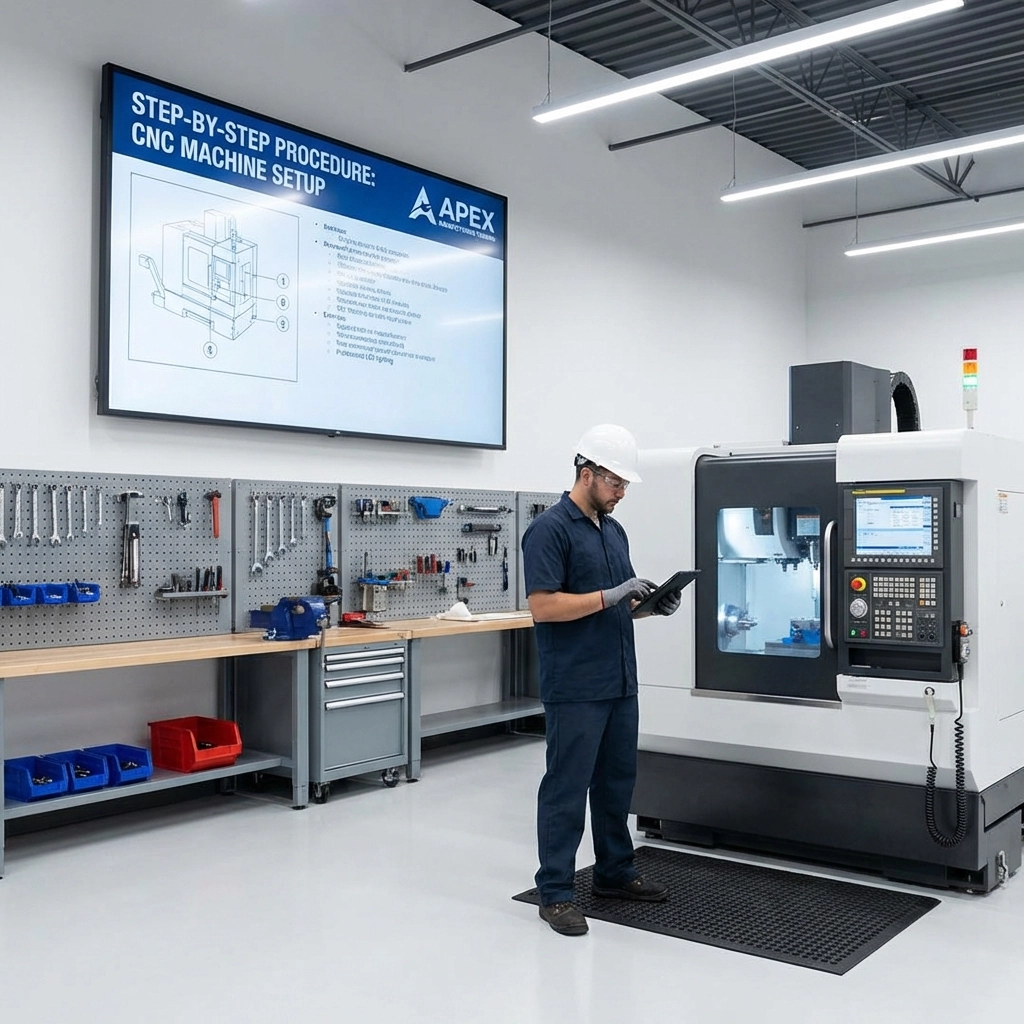
Stop relying on verbal knowledge transfer. Create digital guides that capture:
- Step-by-step equipment procedures
- Troubleshooting decision trees
- Quality checkpoints and standards
- Safety protocols for each station
Action Item: Identify your top three most experienced operators and schedule knowledge capture sessions this month.
Step 2: Implement Pre-Boarding
Your training should begin before day one. Send new hires:
- Digital facility tours
- Safety training modules
- Equipment overview videos
- Company culture and quality standards
This eliminates administrative setup time and lets new employees arrive ready for hands-on training.
Step 3: Create Structured Learning Paths
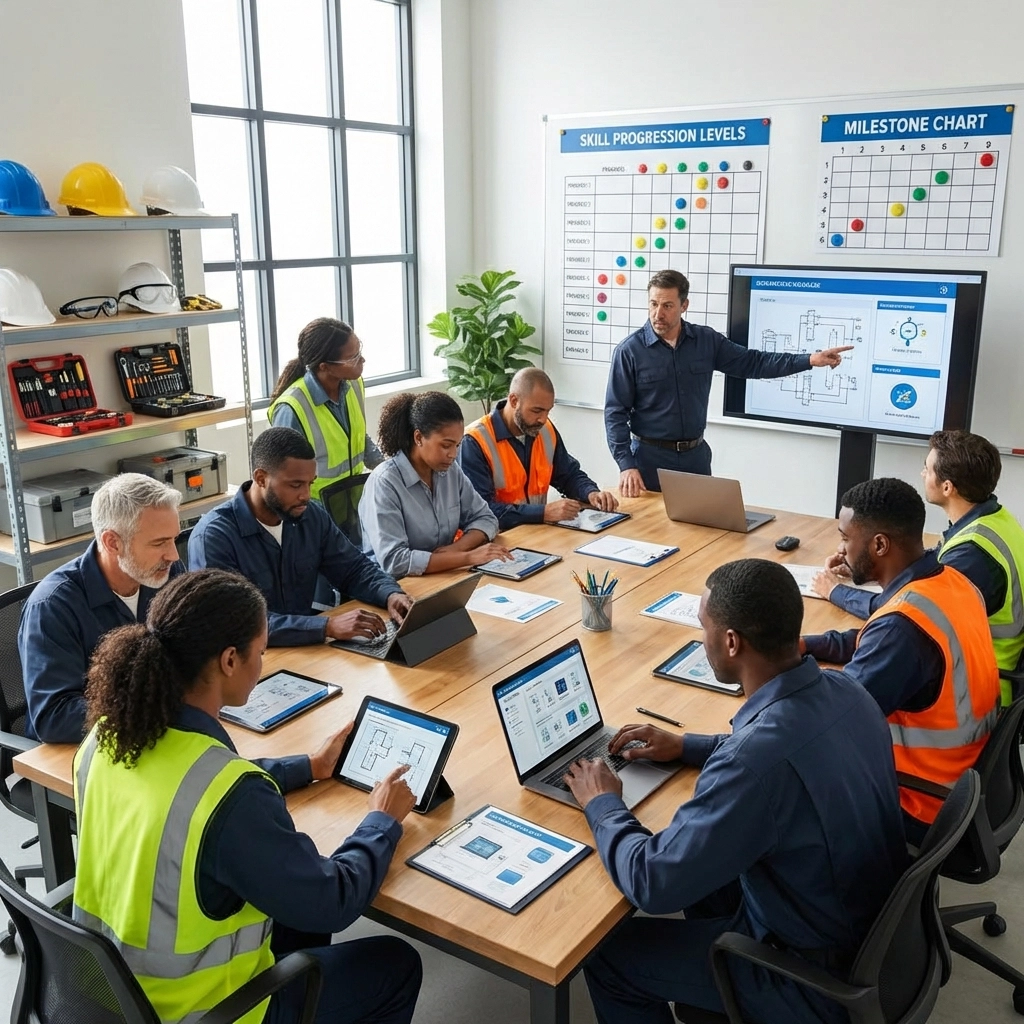
Replace the "shadow and hope" approach with clear milestones:
- Week 1: Safety certification and basic procedures
- Week 2: Equipment operation under supervision
- Week 3: Quality control and troubleshooting
- Week 4: Independent operation with check-ins
Each week should have specific competency requirements before advancement.
Step 4: Deploy On-Demand Support Systems
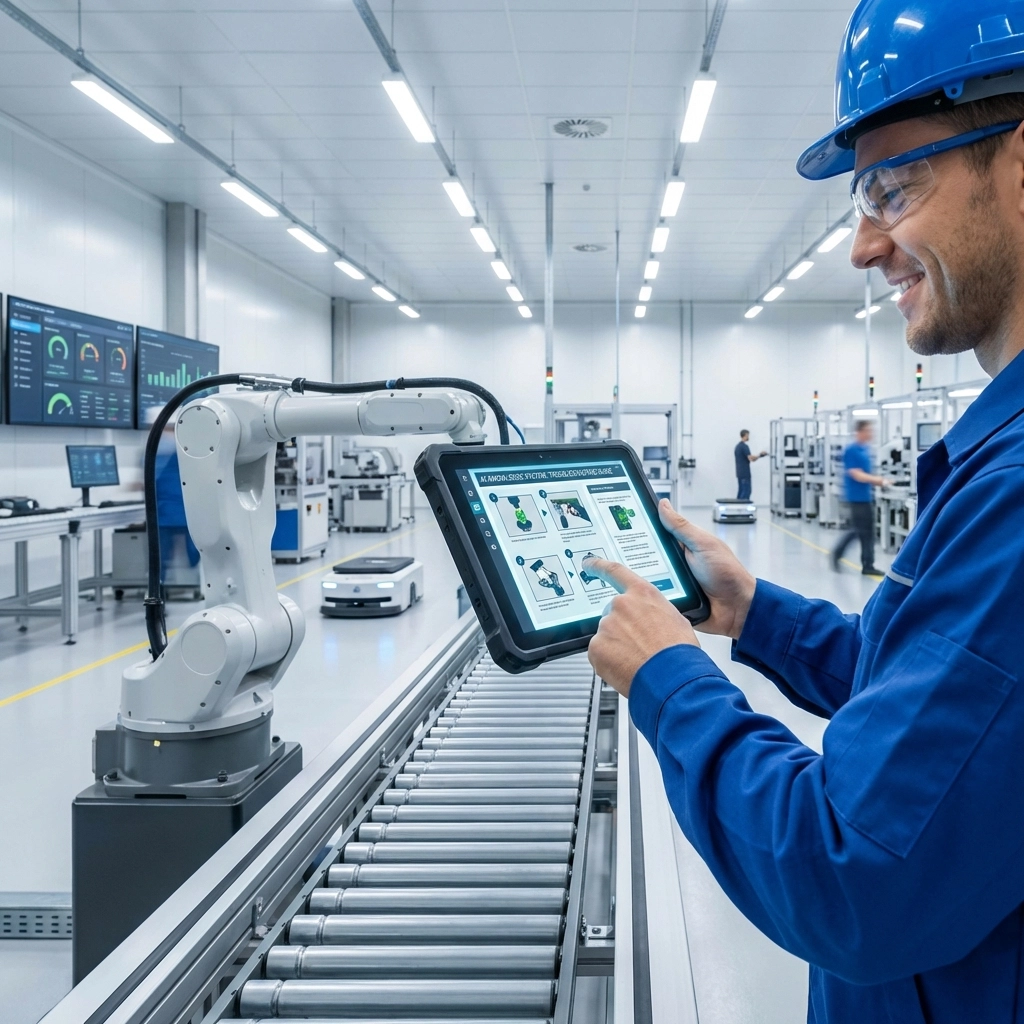
Your new hires need instant access to information without interrupting experienced workers. Digital knowledge systems should provide:
- Searchable procedure libraries
- Visual troubleshooting guides
- Video demonstrations
- Quick reference cards
The Result: Questions get answered in minutes, not hours or days.
Step 5: Use Data-Driven Training Optimization
Track which procedures take longest to master and which generate the most questions. Use this data to:
- Improve training materials
- Identify knowledge gaps
- Optimize learning sequences
- Predict training completion times
Technology as Your Training Accelerator
The most successful ramp-time reductions leverage AI-powered knowledge systems that transform how new hires access and absorb information.
Intelligent Search Capabilities
Instead of asking colleagues, new hires can search "pump not starting troubleshooting" and receive immediate, step-by-step guidance specific to your equipment and procedures.
Interactive Learning Modules
AI-driven training systems adapt to individual learning speeds and styles, ensuring comprehension before moving to advanced topics.
Real-Time Performance Insights
Smart systems track which areas each new hire struggles with, allowing supervisors to provide targeted support instead of generic oversight.
Automated Documentation
Advanced knowledge systems capture and organize tribal knowledge automatically, turning your most experienced workers into digital mentors available 24/7.
Measuring Your Success
Your ramp-time reduction initiative needs clear metrics:
Time to Productivity: Track days from start date to independent operation
Training Efficiency: Measure supervisor hours per new hire
Knowledge Retention: Test comprehension at 30, 60, and 90 days
Safety Performance: Monitor incident rates during training periods
Cost per Hire: Calculate total training investment including lost productivity
Target Goal: Reduce total ramp time to 4-6 weeks while maintaining or improving safety and quality standards.
Implementation Timeline
Month 1: Knowledge capture and digitization
Month 2: Pre-boarding system development and structured learning paths
Month 3: Technology platform implementation and pilot testing
Month 4: Full rollout with data tracking and optimization
Beyond Cost Savings
Faster ramp times create benefits beyond immediate cost reduction:
Improved Employee Experience
New hires feel competent and confident faster, reducing early turnover rates.
Competitive Advantage
Your ability to quickly scale workforce gives you flexibility in busy periods.
Knowledge Preservation
Digital knowledge systems protect against expertise loss when experienced workers leave.
Consistency
Standardized training ensures all employees receive the same high-quality instruction.
Your Next Steps
The six-month ramp time era is ending. Manufacturing facilities that embrace modern training approaches will capture significant competitive advantages while those clinging to traditional methods will continue bleeding money.
Start with knowledge capture: identify your most critical procedures and begin documenting them immediately. Then evaluate technology solutions that can transform your training approach from reactive to proactive.
The question isn't whether you can afford to modernize your training process. It's whether you can afford not to.
Ready to transform your manufacturing training process? Learn more about how Dellini AI's knowledge systems can cut your ramp times and start saving money from day one.